Electrical power systems depend heavily on transformers, circuit breakers, and switchgear. Inside many of these devices is insulating oil, a special liquid that provides both electrical insulation and cooling. To ensure this oil continues to perform properly, it must be tested regularly. The instrument used for this purpose is called an oil tester.
This article explains what an oil tester is, how it works, why it is important, and the key features of a commonly used Fluke oil testing product—all in simple, easy-to-understand language.
What Is an Oil Tester?
An oil tester is a device used to measure the quality and condition of insulating oil, especially transformer oil. Its primary purpose is to determine whether the oil can still withstand high electrical voltage without breaking down.
The most common type of oil tester measures breakdown voltage (BDV) — the voltage level at which the oil fails electrically and allows a spark to pass between electrodes.
If the oil breaks down at a low voltage, it may indicate contamination, moisture, or aging. If it withstands high voltage, the oil is considered to be in good condition.
Why Is Oil Testing Important?
Insulating oil plays two major roles:
- Insulation – Prevents electrical discharge between internal components.
- Cooling – Removes heat from transformers and other high-voltage equipment.
Over time, oil can degrade due to:
- Moisture contamination
- Oxidation
- High temperatures
- Electrical stress
- Dirt or particle contamination
If oil quality decreases, it can lead to:
- Transformer failure
- Short circuits
- Fire hazards
- Power outages
- Costly repairs
Regular oil testing helps detect these problems early and ensures reliable operation.
How Does an Oil Tester Work?
The breakdown voltage test is simple in principle:
- A sample of oil is placed inside a test chamber.
- Two metal electrodes are positioned at a fixed distance.
- Voltage is gradually increased.
- The voltage at which a spark occurs is recorded.
This spark indicates that the oil can no longer insulate effectively at that voltage level.
Modern oil testers automate this process and provide digital results.
Types of Oil Testers
Oil testers are available in different formats:
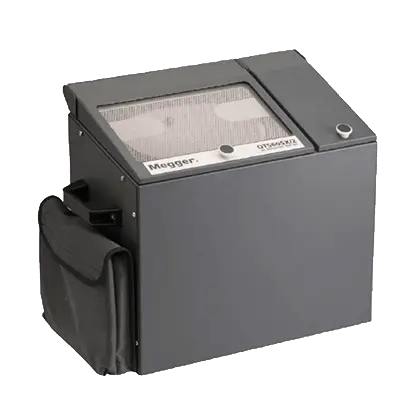
1. Portable Oil Testers
Designed for field use at substations or industrial sites.
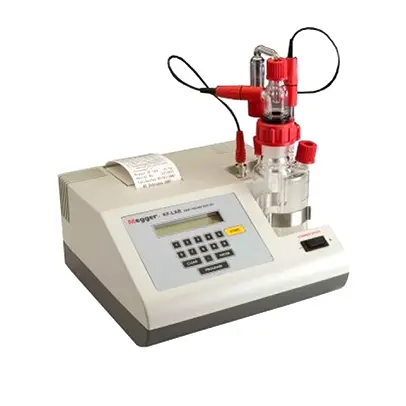
2. Laboratory Oil Testers
Used in controlled environments for detailed analysis.
3. Automatic Oil Testers
Fully programmable units that follow international test standards automatically.
Most modern oil testers are automatic and digitally controlled for accuracy and repeatability.
Key Parameters Measured by Oil Testers
While breakdown voltage is the main focus, oil testers can also support testing related to:
- Dielectric strength
- Repeatability of breakdown results
- Oil conditioning between tests
- Standard compliance testing procedures
Some advanced units allow programmable test sequences to match different testing standards.
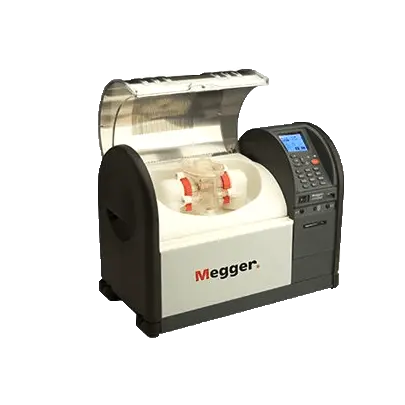
Example Product: Fluke 9050 Insulating Oil Tester
One well-known example of a professional oil testing device is the Fluke 9050 Insulating Oil Tester.
This instrument is designed for testing the dielectric strength of insulating oils in both laboratory and field environments. It combines automation, safety features, and digital reporting in a compact system.
Main Features of the Fluke 9050 Insulating Oil Tester
| Feature |
Description |
| Automatic Breakdown Voltage Testing |
Performs fully automated BDV tests with programmable sequences |
| Wide Voltage Output Range |
Suitable for high-voltage insulating oil testing |
| Pre-Programmed Test Standards |
Supports multiple international oil testing procedures |
| Digital Display |
Clear LCD screen for easy result viewing |
| Automatic Oil Stirring |
Ensures consistent oil condition between test cycles |
| Data Storage Capability |
Saves multiple test results for documentation |
| USB Connectivity |
Enables transfer of data to computer systems |
| Safety Interlock System |
Prevents operation if the test chamber is open |
| Portable Design |
Compact and suitable for on-site field testing |
| Rugged Construction |
Designed for industrial environments |
These features make it suitable for utilities, industrial plants, maintenance teams, and testing laboratories.
Who Uses Oil Testers?
Oil testers are commonly used by:
- Power utilities
- Transformer manufacturers
- Electrical maintenance teams
- Substation operators
- Industrial plants
- Oil testing laboratories
Any organization operating oil-filled electrical equipment benefits from regular oil testing.
Benefits of Using an Oil Tester
Prevents Equipment Failure
Early detection of oil degradation prevents major transformer damage.
Reduces Maintenance Costs
Testing is far less expensive than replacing damaged equipment.
Improves Safety
Good oil quality reduces the risk of internal arcing and fire.
Extends Equipment Life
Properly maintained oil prolongs transformer lifespan.
Supports Predictive Maintenance
Regular monitoring allows planned maintenance rather than emergency repair.
Understanding Breakdown Voltage Results
The breakdown voltage value indicates the oil condition. Higher values mean stronger insulation.
| Breakdown Voltage (kV) |
Condition of Oil |
| Above 60 kV |
Excellent |
| 40–60 kV |
Good |
| 30–40 kV |
Marginal – needs monitoring |
| Below 30 kV |
Poor – requires treatment or replacement |
(Note: Actual acceptable values depend on equipment rating and standards.)
Oil Treatment Options
If oil test results show poor condition, corrective actions may include:
- Filtration to remove particles
- Dehydration to remove moisture
- Degassing to remove dissolved gases
- Full oil replacement if severely degraded
Regular testing ensures these actions are taken at the right time.
Safety Considerations When Using an Oil Tester
Since high voltage is involved, safety is critical:
- Always ensure proper grounding
- Use insulated tools and gloves
- Keep the test chamber closed during operation
- Follow standard test procedures
- Avoid contamination during oil sampling
Modern testers include built-in safety interlocks to reduce risk.
Portable vs Laboratory Oil Testers
| Portable Oil Tester |
Laboratory Oil Tester |
| Used on-site |
Used in a controlled environment |
| Compact and lightweight |
Larger and more advanced |
| Quick testing |
Detailed analysis |
| Ideal for routine maintenance |
Ideal for research and certification |
The choice depends on operational needs.
How Often Should Oil Be Tested?
Testing frequency depends on:
- Transformer size
- Load conditions
- Environmental exposure
- Equipment age
Typical practice:
- New equipment: Annually
- Critical systems: Every 6–12 months
- Older equipment: More frequent monitoring
High-risk installations may require quarterly testing.
Future of Oil Testing Technology
Oil testing is evolving with:
- Digital data management
- Automated testing sequences
- Smart transformer monitoring systems
- Integration with predictive maintenance software
As power systems become more complex, oil testers will continue to play a crucial role in reliability and safety. An oil tester is an essential tool for evaluating the condition of insulating oil in transformers and other high-voltage equipment. By measuring breakdown voltage and ensuring oil quality, it helps prevent failures, improve safety, and extend equipment life. Modern devices like the Fluke 9050 Insulating Oil Tester offer automation, safety, and digital reporting in a portable design suitable for both field and laboratory use. Regular oil testing is not just routine maintenance—it is a smart investment in the long-term reliability and safety of electrical systems.































 Calibration
 HVAC/Clean Rooms
 Electrical
 Temperature Meters
 Power & Energy
 Mechanical & Maintenance
 Pharma, Health & Biomedical
 Drone Solution
 Networking
 Transformer & Relay Testing
 Insulation, Resistance and Battery
 Fault Testing & Diagnostics
 Lightning Protection Solution
 Education, Research & Development
 Civil Equipment
 Renewable Energy
 Cleaning and supplies
 Power Tools
 Safety Tools
 Hardwares
 Construction Supply
 Precision Tools
 Garden Tools
 Accessories
 Machines
 Hand Tools