A motor analyzer is an important electronic device used to analyze and monitor the performance of motor drive systems. It is capable of determining the input and output signals, voltage, current, power factor, harmonics, and other electrical parameters of the motor. Modern motor drive analyzers can collect and analyze data in real-time, which helps in diagnosing the health of the machine and making appropriate decisions during maintenance.
The use of this device is increasing day by day to increase the efficiency of industrial automation, production systems, and power-driven equipment. It helps identify faults, which reduces production downtime and saves costs. Many people can use it in a portable form to check the performance of the motor anytime, anywhere. In addition, motor drive analyzers play an important role in maintaining environmental standards and ensuring safe operation.
Motor Analyzer: A Complete and Easy-to-Understand Guide
Electric motors power much of the modern world. From industrial machines and water pumps to elevators, air conditioners, and production lines, motors play a critical role in daily operations. But like any machine, motors can develop problems over time.
A motor analyzer is a specialized instrument used to test, monitor, and diagnose the performance and health of electric motors. It helps technicians identify electrical and mechanical issues before they become serious failures.
This article explains motor analyzers in a simple and clear way, so anyone—from beginners to professionals—can understand how they work and why they are important.
What Is a Motor Analyzer?
A motor analyzer is a diagnostic tool that evaluates the condition and performance of electric motors. It measures electrical signals such as voltage and current and uses them to determine how well a motor is operating.
Modern motor analyzers can:
- Measure electrical parameters (voltage, current, power)
- Detect imbalance or harmonic distortion
- Estimate motor speed and torque
- Evaluate motor efficiency
- Identify drive-related problems
- Generate reports for maintenance records
Instead of physically attaching mechanical sensors to a motor shaft, many analyzers calculate mechanical performance using electrical data. This saves time and allows testing while the motor is running.
Why Is Motor Analysis Important?
Motors are expensive and critical to many operations. When a motor fails, it can cause:
- Production downtime
- Safety risks
- Costly repairs
- Energy waste
Using a motor analyzer helps:
1. Prevent Unexpected Failures
Early detection of electrical imbalance, overheating, or drive problems prevents major breakdowns.
2. Improve Energy Efficiency
Motors consume a large portion of industrial electricity. An analyzer can determine whether a motor is operating efficiently.
3. Reduce Maintenance Costs
Accurate diagnosis reduces guesswork and unnecessary part replacements.
4. Increase Equipment Lifespan
Identifying and correcting issues early extends motor life.
How Does a Motor Analyzer Work?
A motor analyzer works in two main ways:
1. Electrical Analysis
It measures:
- Voltage
- Current
- Frequency
- Power
- Harmonics
- Phase imbalance
These measurements reveal issues such as poor power quality, overload conditions, or unstable drive signals.
2. Mechanical Performance Estimation
By entering motor nameplate data (rated power, voltage, speed, etc.), the analyzer calculates:
- Speed (RPM)
- Torque
- Mechanical power
- Efficiency
This provides insight into how well the motor is converting electrical energy into mechanical output.
Types of Motor Analyzers
Motor analyzers can be grouped into different categories:
Portable Motor Analyzers
Handheld devices are used for field troubleshooting and maintenance.
Power Quality & Motor Analyzers
These measures both motor performance and electrical system quality.
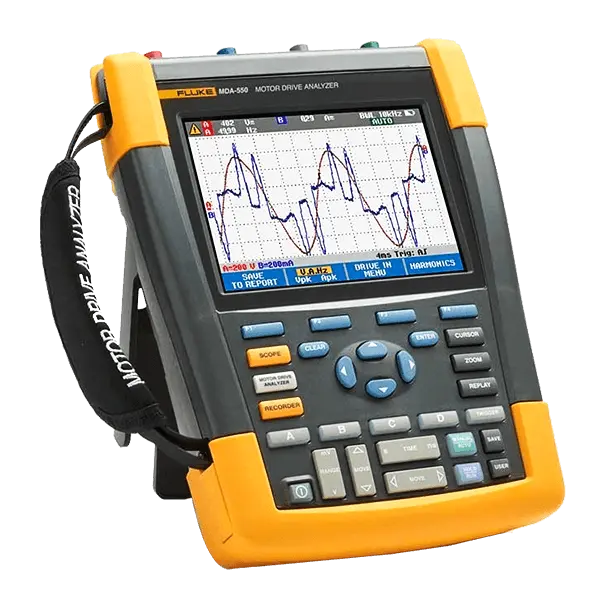
Motor Drive Analyzers
Designed specifically for motors controlled by variable frequency drives (VFDs). They analyze inverter output signals and drive performance.
Here is a clean comparison table of three motor analyzer products from three different brands, without references and written in a clear, professional format.
The three brands compared are:
- Fluke
- Megger (Baker Instruments)
- Hioki
Motor Analyzer Comparison Table
| Feature / Specification |
Fluke MDA-550 Series III Motor Drive Analyzer |
Megger Baker ADX15 |
Hioki PW3390 Power Analyzer |
| Brand |
Fluke |
Megger (Baker Instruments) |
Hioki |
| Primary Function |
Motor drive troubleshooting & analysis |
Static motor and insulation testing |
High-precision power and motor efficiency analysis |
| Testing Type |
Online (motor running) |
Offline (motor disconnected) |
Online power and efficiency testing |
| Best For |
Variable frequency drive (VFD) systems |
Motor winding & insulation diagnostics |
Laboratory and high-accuracy motor testing |
| Voltage Measurement |
Yes |
Yes (high-voltage insulation tests up to 15 kV) |
Yes |
| Current Measurement |
Yes |
Limited (focus on insulation) |
Yes (high accuracy) |
| Harmonics Analysis |
Yes |
No |
Yes |
| DC Bus Analysis |
Yes |
No |
Limited |
| Shaft Voltage Detection |
Yes |
No |
No |
| Insulation Testing |
No |
Yes (advanced winding & insulation diagnostics) |
No |
| Efficiency Calculation |
Yes |
No |
Yes |
| Data Logging |
Yes |
Yes |
Yes |
| Reporting Capability |
Built-in automated reports |
Advanced diagnostic reports |
PC-based analysis software |
| Portability |
Portable handheld |
Portable workshop unit |
Bench-top instrument |
| Typical Users |
Field service technicians |
Motor repair shops |
Engineers & R&D labs |
Key Differences Explained
Best suited for troubleshooting motor drives in industrial environments. It is ideal when diagnosing problems in motors connected to VFDs. It combines oscilloscope functions, harmonic analysis, and drive testing in one portable device.
Megger Baker ADX15
Designed mainly for static motor testing. It is commonly used in motor repair workshops to test insulation, winding condition, and motor health before installation or after repair.
Hioki PW3390
A high-precision power analyzer is mainly used in laboratories and engineering environments. It is excellent for detailed motor efficiency and inverter performance evaluation.
Simple Selection Guide
-
For troubleshooting running motors and drives → Fluke
-
For insulation and winding diagnostics → Megger
-
For high-accuracy power and efficiency measurement → Hioki
Common Motor Problems a Motor Analyzer Can Detect
A motor analyzer helps identify several common issues:
1. Voltage Imbalance
Unequal voltage between phases can cause overheating and reduce motor life.
2. Harmonic Distortion
Harmonics create extra heat and reduce efficiency.
3. Overloading
Running a motor beyond its rated capacity causes premature wear.
4. Bearing Damage
Electrical discharge through the shaft can damage bearings.
5. Drive Malfunction
Issues in variable frequency drives can affect motor speed and performance.
Where Are Motor Analyzers Used?
Motor analyzers are widely used in:
- Manufacturing plants
- Oil and gas facilities
- Power generation stations
- HVAC systems
- Water treatment plants
- Maintenance service companies
Any environment that depends heavily on electric motors benefits from motor analysis.
Benefits of Using a Motor Analyzer
Here are the key advantages:
Improved Reliability
Continuous monitoring reduces unexpected downtime.
Energy Savings
Optimized motors consume less electricity.
Faster Troubleshooting
Clear measurements eliminate guesswork.
Better Maintenance Planning
Trend data helps schedule maintenance proactively.
Professional Documentation
Reports support compliance and audits.
Motor Analyzer vs. Basic Multimeter
A multimeter can measure voltage and current, but it cannot:
- Analyze harmonics
- Estimate torque or efficiency
- Detect drive-related waveform issues
- Provide detailed motor health diagnostics
A motor analyzer is much more advanced and specialized for motor systems.
Who Should Use a Motor Analyzer?
Motor analyzers are ideal for:
- Maintenance technicians
- Electrical engineers
- Plant managers
- Energy auditors
- Service contractors
Even students studying electrical engineering can benefit from understanding how these tools work.
A motor analyzer is an essential diagnostic tool for evaluating electric motor performance and health. It measures electrical signals and calculates mechanical performance, helping users detect issues early and maintain efficient operation.
Modern tools like the Fluke MDA-550 Series III Motor Drive Analyzer combine multiple testing capabilities into one portable device, making motor troubleshooting faster, safer, and more accurate.
In industries where motors are critical to productivity, a motor analyzer is not just a testing device—it is a valuable investment in reliability, efficiency, and long-term cost savings.































 Calibration
 HVAC/Clean Rooms
 Electrical
 Temperature Meters
 Power & Energy
 Mechanical & Maintenance
 Pharma, Health & Biomedical
 Drone Solution
 Networking
 Transformer & Relay Testing
 Insulation, Resistance and Battery
 Fault Testing & Diagnostics
 Lightning Protection Solution
 Education, Research & Development
 Civil Equipment
 Renewable Energy
 Cleaning and supplies
 Power Tools
 Safety Tools
 Hardwares
 Construction Supply
 Precision Tools
 Garden Tools
 Accessories
 Machines
 Hand Tools