RF Calibration is a very important process to ensure the performance and accuracy of radio frequency systems. Through this, the power, frequency, phase, and other signal parameters of radio waves are accurately measured and set. Without RF calibration, communication devices such as antennas, transmitters, and receivers cannot function properly, which leads to poor signal quality and data quality.
This calibration is usually performed using advanced equipment such as spectrum analyzers, power meters, and signal generators. RF calibration is essential in various industrial fields such as telecommunications, satellite communications, military, and radar systems. It reduces the difference between the output and input of the device, resulting in fewer errors or disruptions in data transmission. Proper RF calibration reduces signal loss and increases system performance, which improves the stability and efficiency of the device in the long run. Therefore, RF calibration is highly important in both technical and business fields.
RF Calibration Equipment and Services in Bangladesh
With the rapid expansion of wireless communication, broadcasting, satellite systems, and mobile networks, RF (Radio Frequency) calibration has become an essential technical requirement in Bangladesh. From telecom operators to electronics manufacturers, organizations rely on accurate RF measurements to ensure system performance, regulatory compliance, and signal integrity.
As Bangladesh continues to strengthen its telecommunications infrastructure and digital connectivity, the demand for reliable RF calibration equipment and accredited calibration services is steadily increasing.
What Is RF Calibration?
RF calibration is the process of verifying and adjusting radio frequency measuring instruments to ensure their readings are accurate and traceable to recognized standards. RF instruments operate across wide frequency ranges—from kHz to GHz—and even minor measurement errors can significantly impact communication systems.
Calibration ensures:
- Frequency accuracy
- Output power accuracy
- Signal purity (low distortion and harmonics)
- Phase noise and modulation accuracy
- Impedance matching (typically 50 ohms systems)
Calibration certificates are typically issued in compliance with ISO/IEC 17025 standards, ensuring international traceability.
Importance of RF Calibration in Bangladesh
RF calibration plays a critical role in several key sectors:
1. Telecommunications
Mobile network operators in Bangladesh depend on accurate RF measurements for base station testing, antenna alignment, and signal optimization for 4G and emerging 5G networks.
2. Broadcasting
TV and radio transmitters require precise frequency and power calibration to avoid interference and maintain broadcast quality.
3. Electronics Manufacturing
Manufacturers of RF modules, IoT devices, and communication equipment require calibrated instruments for product testing and quality assurance.
4. Defense and Aviation
Radar, navigation, and communication systems rely heavily on high-precision RF measurement and periodic calibration.
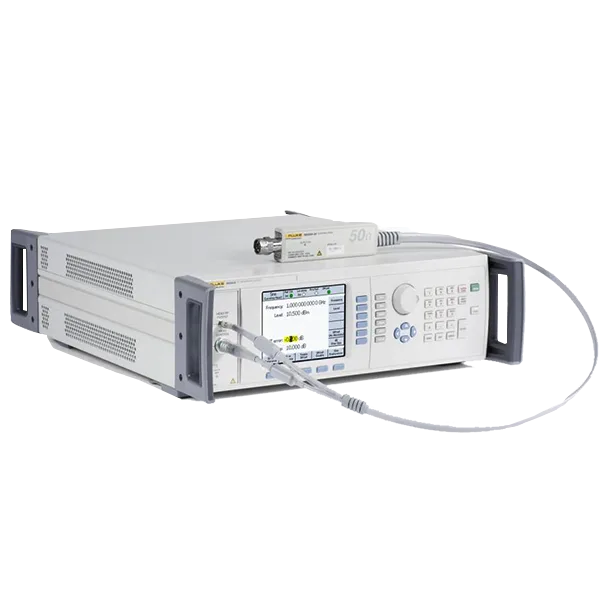
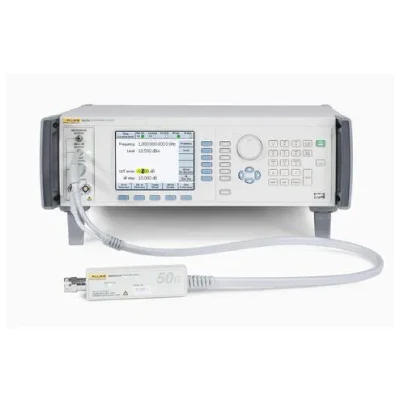
Major RF Calibration Equipment
Below is a structured overview of commonly used RF calibration equipment:
| Equipment Name |
Primary Function |
Typical Frequency Range |
Application Area |
| RF Signal Generator |
Generates stable RF signals for testing |
kHz to GHz |
Calibrating spectrum analyzers & receivers |
| Spectrum Analyzer |
Measures signal spectrum, harmonics, and noise |
kHz to GHz |
Signal quality analysis |
| Vector Network Analyzer (VNA) |
Measures S-parameters (reflection & transmission) |
MHz to GHz |
Antenna and RF circuit testing |
| RF Power Meter & Sensor |
Measures RF power accurately |
kHz to GHz |
Transmitter calibration |
| Frequency Counter |
Measures frequency accuracy |
Hz to GHz |
Signal verification |
| RF Attenuator (Precision) |
Reduces signal power in controlled steps |
DC to GHz |
Calibration transfer standards |
| Phase Noise Analyzer |
Measures signal phase stability |
MHz to GHz |
High-end communication systems |
| Oscilloscope (RF capable) |
Time-domain signal analysis |
MHz to GHz |
Signal waveform evaluation |
These instruments are often supported by reference standards such as calibrated power sensors, frequency standards, and impedance standards to ensure measurement traceability.
RF Calibration Services in Bangladesh
Several accredited laboratories and private technical service providers in Bangladesh offer RF and electrical calibration services. Many operate under ISO/IEC 17025 accreditation and provide:
- In-lab RF calibration
- On-site calibration support
- Traceable calibration certificates
- Preventive maintenance and verification
- Annual calibration contracts
Organizations such as Bangladesh Standards and Testing Institution (BSTI) contribute to maintaining national measurement standards, while private calibration laboratories support telecom operators, manufacturing plants, and research institutions. As the telecom sector expands under the regulation of the Bangladesh Telecommunication Regulatory Commission (BTRC), compliance testing and RF accuracy verification have become increasingly important.
Challenges in RF Calibration in Bangladesh
Despite growth, several challenges remain:
- High cost of advanced RF reference standards
- Limited ultra-high frequency calibration capability (above several GHz)
- Need for highly trained RF metrology engineers
- Dependence on imported calibration-grade equipment
However, investment in technical training and modern laboratories is gradually strengthening local capability.
Future Outlook
With the deployment of 5G networks, satellite communication expansion, IoT growth, and smart infrastructure projects, Bangladesh’s demand for high-accuracy RF calibration will continue to rise.
Future developments are expected in:
- Higher frequency calibration capability
- Automated calibration systems
- Integration with smart metrology software
- Expansion of accredited RF laboratories
RF calibration equipment and services form a critical backbone of Bangladesh’s wireless communication and electronics sectors. Accurate calibration ensures system reliability, regulatory compliance, signal quality, and international competitiveness. As the country advances toward a more connected and technology-driven economy, investment in RF metrology infrastructure and expertise will remain essential for sustainable growth and innovation.































 Calibration
 HVAC/Clean Rooms
 Electrical
 Temperature Meters
 Power & Energy
 Mechanical & Maintenance
 Pharma, Health & Biomedical
 Drone Solution
 Networking
 Transformer & Relay Testing
 Insulation, Resistance and Battery
 Fault Testing & Diagnostics
 Lightning Protection Solution
 Education, Research & Development
 Civil Equipment
 Renewable Energy
 Cleaning and supplies
 Power Tools
 Safety Tools
 Hardwares
 Construction Supply
 Precision Tools
 Garden Tools
 Accessories
 Machines
 Hand Tools