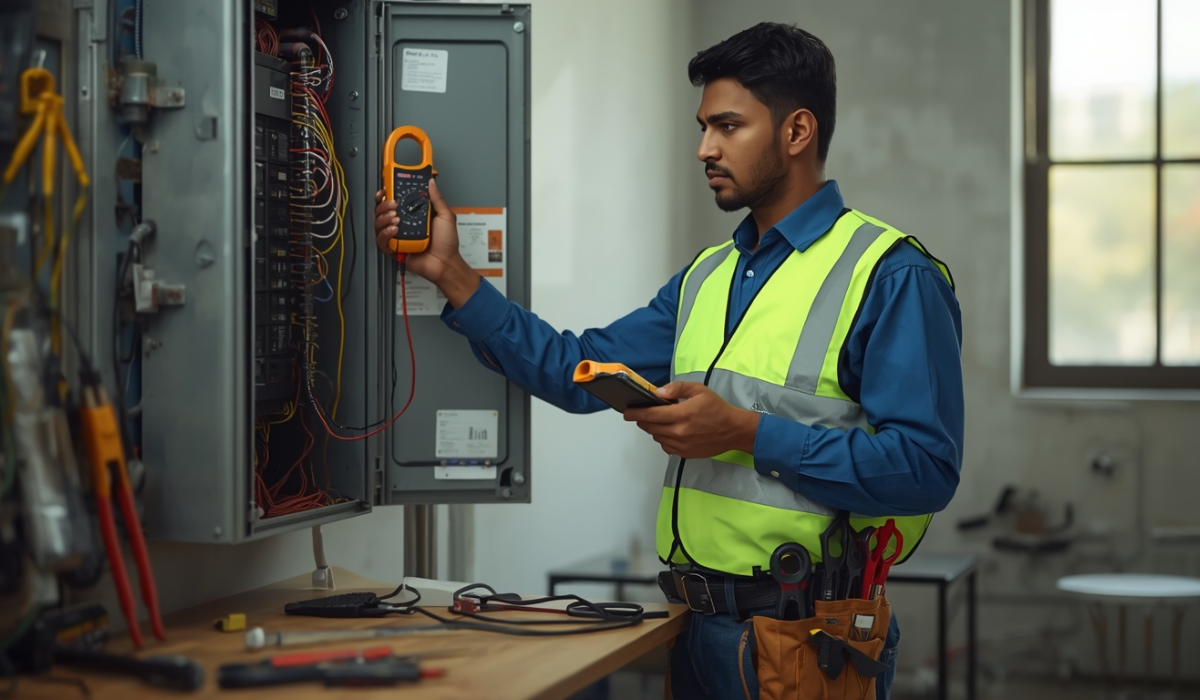

Good electrical work is a matter of the right tools. Get the wrong one, and a five-minute job becomes an hour of guesswork or, worse, shock. This list was compiled after talking to working electricians and tool sellers all over Bangladesh about what actually stays in their bag, not just what looks useful on a shop shelf. If you’re looking for reliable electrical tools in Bangladesh, this guide will help you choose the right tools for the job.
Here are the 7 tools electricians use again and again, what each tool really does, and about how much it costs. You will find real versions of all these at Tools Bangladesh.
To summarize:
Begin with a voltage tester and a multimeter, add a clamp meter and insulated hand tools when you’re working regularly, and consider the megger and earth tester as tools you grow into.
Here’s a quick list, in the order most electricians build their kit:
Voltage tester (non-contact)
Insulated screwdrivers & pliers.
Clampmeter
Digital multimeter insulation resistance tester (Megger)
Wire cutter and stripper Earth resistance tester
1. Non-contact voltage tester
This device is usually the first tool used on any job. A non-contact voltage tester senses whether a wire is live without you having to touch any metal part of it. The tip is held near the wire; if the wire is live, the tool beeps or lights up. Why is this feature critical? The one habit that keeps most electrical shocks off the job is checking for power before you touch anything. It takes two seconds, and it's not optional. In Bangladesh, a reliable tester costs between 300 and 1500 taka. Spend a little extra on one with adjustable sensitivity. Occasionally the cheaper models will give you a false reading if another live wire is running nearby, and that's one of those things you don't want to guess wrong about."
2. Insulated screwdriver and pliers
Hand tools that are insulated are covered with rubber or plastic that is rated for a certain voltage, usually up to 1,000V. You can't do these tasks with normal tools. If you accidentally touch a live wire with a non-insulated screwdriver, current can flow through the metal and into your hand. A basic set of insulated screwdrivers will cost around 400 to 1,200 taka. There are insulated lineman pliers, the ones with a strong jaw for twisting and cutting wire, which cost a bit more, generally 800 to 2,500 taka depending on the brand and the quality of the steel. One tip in buying: look for a printed voltage rating on the handle before you pay. If it's not stamped, it's not approved. No matter what the seller says, treat it as a regular tool, not a safety tool. If you want to compare a size up from the basic rated gear, like a clamp meter, it is usually filed under our safety tools range.
3. Clamp meter
A clamp meter measures current by clamping around a wire, rather than breaking the circuit to connect the test leads. That's a big deal in this job, because you don't have to shut down anything or cut into a live circuit just to get a reading. Most clamp meters available in Bangladesh can handle up to 600-1000 amps AC, which is enough for almost all household and small commercial jobs you will encounter. Basic models start at about 1500 taka and go well beyond 8000 taka for true-RMS reading and data-logging types such as the Fluke 381 or the Hioki 3288-20. If you regularly test motors, air conditioners, or anything with a varying load, pay the extra money for a true RMS model. Cheap meters will give you a wrong number on anything that is not a clean, steady current, and a wrong number on a motor circuit is worse than no number at all.
4. Digital voltmeter
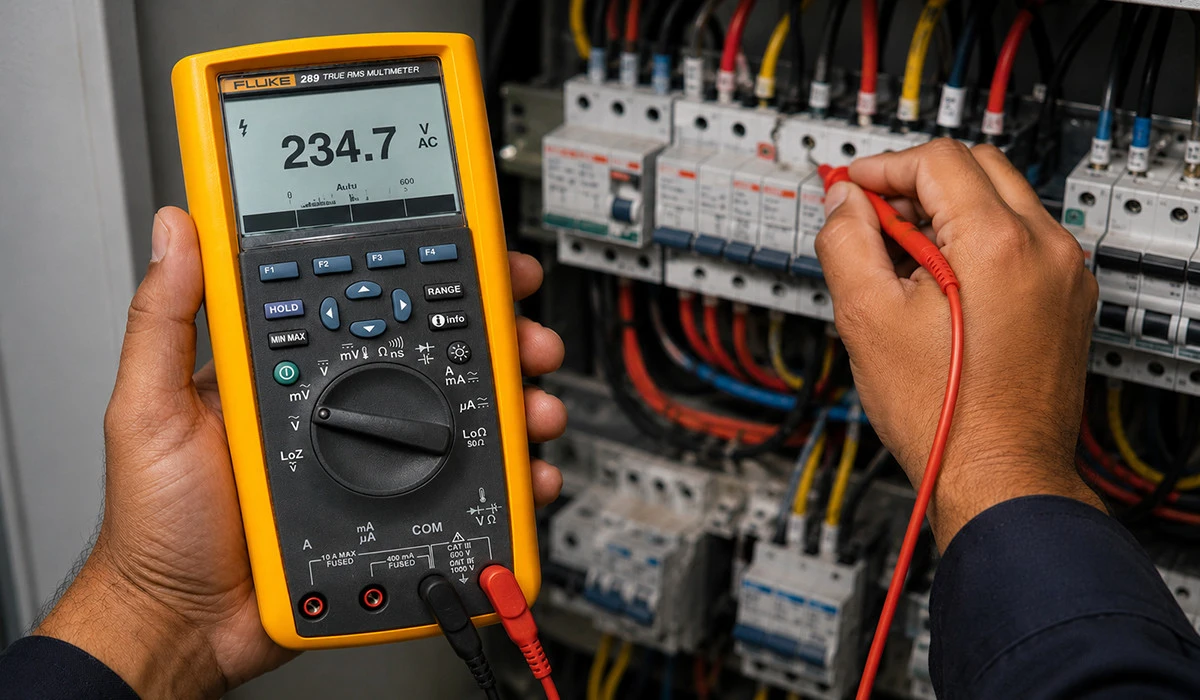
If you only have one testing tool, this is probably the one. Digital multimeter for checking voltage, current, resistance, and continuity. In simple terms, it shows if there is power, how much, and whether a wire or part is connected correctly. Multimeters have many different dial settings, and occasionally that can confuse new electricians. Stick with three at first: voltage (marked V), continuity (usually a sound-wave symbol, and the meter beeps when a circuit is complete), and resistance (marked with the Ω symbol). Those three settings cover the majority of day-to-day checks, and we've broken down all of them in more detail in our multimeter guide. A basic model that covers the basics (like a Mastech MS8217 or Sanwa PM3) should cost you between 450 and 1,200 taka, while one with auto-ranging costs 3,000 to 4,000 taka. Auto-ranging simply means that the meter figures out the right measurement scale for itself, so you don’t have to figure it out and set it every time.
5. Megohmmeter (insulation resistance tester)
Most electricians just call this device a “megger.” It checks to see if the insulation around a wire is still doing its job or if it is worn down enough to leak current where it should not. This is more relevant in Bangladesh than in drier countries, as heat and humidity faster deteriorate wire insulation over time. You usually see a megger come out before a building gets wired for the first time, or when troubleshooting a fault a regular multimeter can't explain. It’s not really a daily-carry tool, more of a “bring it out for the bigger jobs” tool. The price of a basic digital megger starts at around 3,000 taka and goes above 10,000 taka for models used in commercial and industrial wiring.
6. Wire cutter and stripper
It's a simple tool that does exactly what it is supposed to do. It cuts a wire to length and strips off the plastic coating. But you can quickly see the difference between a good one and a bad one. A bad stripper nicks the copper underneath, which weakens the wire and can cause a break or a hot spot down the line. Find one that has the wire gauge sizes right on the jaws so you don't have to guess how deep to strip. The Proskit CP-200 is one such tool that strips, cuts, and crimps in one unit, which saves space in the bag. Prices are low, from 150 to 900 taka, so there is little incentive to grab the cheapest item on the shelf and hope for the best.
7. Ground resistance tester
It checks that a building’s earthing system is actually working and that, if something goes wrong, there is somewhere safe for the extra current to go, into the ground and not through a person or an app
What do most electricians reach for?
Ask any 10 electricians, and they'll all tell you the same thing: the multimeter. It can tell you just about anything you want to know about a circuit, whether it's live, how much power is running through it, and whether a part is actually hooked up. A voltage tester is used more times a day because it's the quick first check before you touch anything, but the multimeter is what you grab when you want a real answer instead of a simple yes or no.
Which brand can you trust?
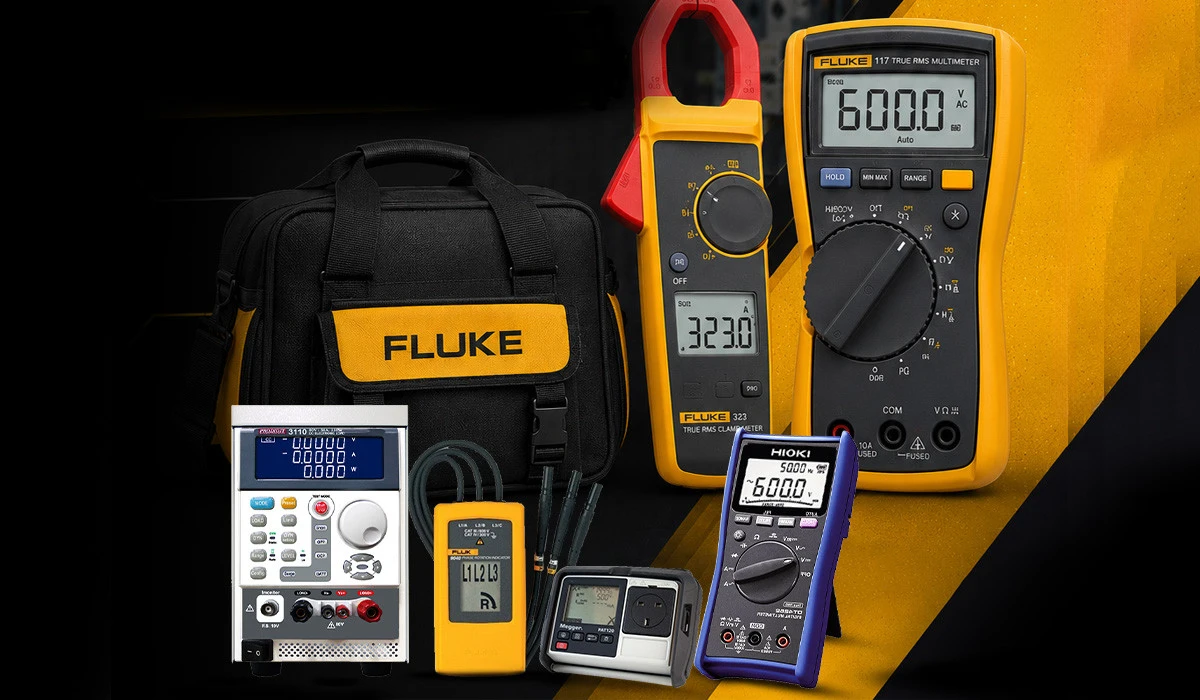
There’s no one best brand. Overall, it is contingent upon your budget and how often you’ll use the tool. Fluke is a well-respected brand of test equipment with a good worldwide reputation, especially for multimeters and clamp meters, but it is at the high end of the price range. If you have a limited budget, brands like UNI-T and Mastech offer suitable options for daily work at a lower price. Bosch and Makita lead on durability on the power tool side, while Total and Ingco give you a reasonable middle ground between price and build quality. You can browse our power tools section to see what brands are in stock. The honest advice here: pay more for whatever tool you use every single day, and save on the ones that only come out once in a while.
What is the best tool to begin with?
If you are just building a kit, then start with a non-contact voltage tester and a basic digital multimeter. Together they cost less than 2,000 taka and will deal with most of the things a new electrician is likely to come across, from testing for live wires to reading voltage, resistance, and continuity. All the other tools on this list are things you can add when the jobs get bigger and the work becomes more regular. You can build your kit on a budget. You don’t need to buy all seven tools at once, and most electricians really didn’t. Here’s a simple way to spread the cost over three stages. Starter kit (below 3,000 taka): a non-contact voltage tester, a basic digital multimeter, and one insulated screwdriver from our hand tools range. This includes the checks you’ll need on almost any small residential project. Working kit (5,000-8,000 taka extra): full set of insulated screwdrivers and pliers, wire stripper, and a basic clamp meter. Now you should be ready to handle most household and small commercial jobs without having to borrow tools from anyone. Fully equipped (add 8,000 taka and more): insulation resistance tester and earth resistance tester (even a shared/rented one). This stage is where you are ready for new wiring jobs and bigger fault-finding work and not just repairs.
Buying in stages also means you learn each tool properly before adding the next, which is more important than people think. To someone who's never used one, a megger is an expensive way to get a confusing number.
What is a Digital MultiMeter (DMM)? The Electrician’s Most Trusted Companion, Section 4 Extended Version, Setting by Setting. Reasons to Use Fluke Products: How Fluke Really Gets Its Price Tag: A Complete Guide for Professionals in Bangladesh
Electric Tools in Bangladesh: A Buyer’s Guide for Electricians, Engineers & Technicians: A broader view beyond this list of seven.
Frequently asked questions
What tools do beginners need to start working as an electrician?
A non-contact voltage tester at a minimum, a basic digital multimeter, and a set of insulated screwdrivers. This is a guide to checking power, taking readings, and working safely on most small jobs. And all the other tools are added as the job requires.
What tools does an electrician carry on a daily basis?
The average working electrician carries a voltage tester, a multimeter, insulated pliers and screwdrivers, a wire stripper, and basic hand tools such as a hammer and flashlight. The bigger tools, such as a megger or earth tester, tend to stay in the van or the office and only come out when the job demands it. The multimeter is the most commonly used testing tool in electrical work. The multimeter and the non-contact voltage tester are by far the most commonly used. The voltage tester is for quick safety checks; the multimeter for detailed readings.
What is the most trusted brand of professional electricians in Bangladesh?
It’s sorted by tool type. Fluke is well-respected for testing equipment, used daily by professionals. Bosch and Makita are trusted brands for power tools. Instead, budget-conscious buyers turn to Total, Ingco, and UNI-T. Our electrical tools section has the real thing from these brands, which matters more than people realize when making a warranty claim.
How much is a full set of electrician tools in Bangladesh?
A good starter kit costs less than 3,000 taka. Adding a clamp meter and fully insulated hand tools to build up to a working kit adds another 5,000-8,000 taka. A full kit with an insulation tester and an earth tester costs over 20,000 taka, but most electricians build it up gradually, not all at once.
Conclusion
You won’t need all of these on day one. Start with a voltage tester and multimeter; those two will cover most situations. Add insulated hand tools and a clamp meter once you are working regularly, and treat the megger and earth tester as tools you will need for bigger jobs rather than for everyday carry. Buy from a vendor that will support the tool after you have paid for it. What matters is the brand name on the box.




 Calibration
 HVAC/Clean Rooms
 Electrical
 Temperature Meters
 Power & Energy
 Mechanical & Maintenance
 Pharma, Health & Biomedical
 Drone Solution
 Networking
 Transformer & Relay Testing
 Insulation, Resistance and Battery
 Fault Testing & Diagnostics
 Lightning Protection Solution
 Education, Research & Development
 Civil Equipment
 Renewable Energy
 Cleaning and supplies
 Power Tools
 Safety Tools
 Hardwares
 Construction Supply
 Precision Tools
 Garden Tools
 Accessories
 Machines
 Hand Tools

i hope this is ai generated image and content